
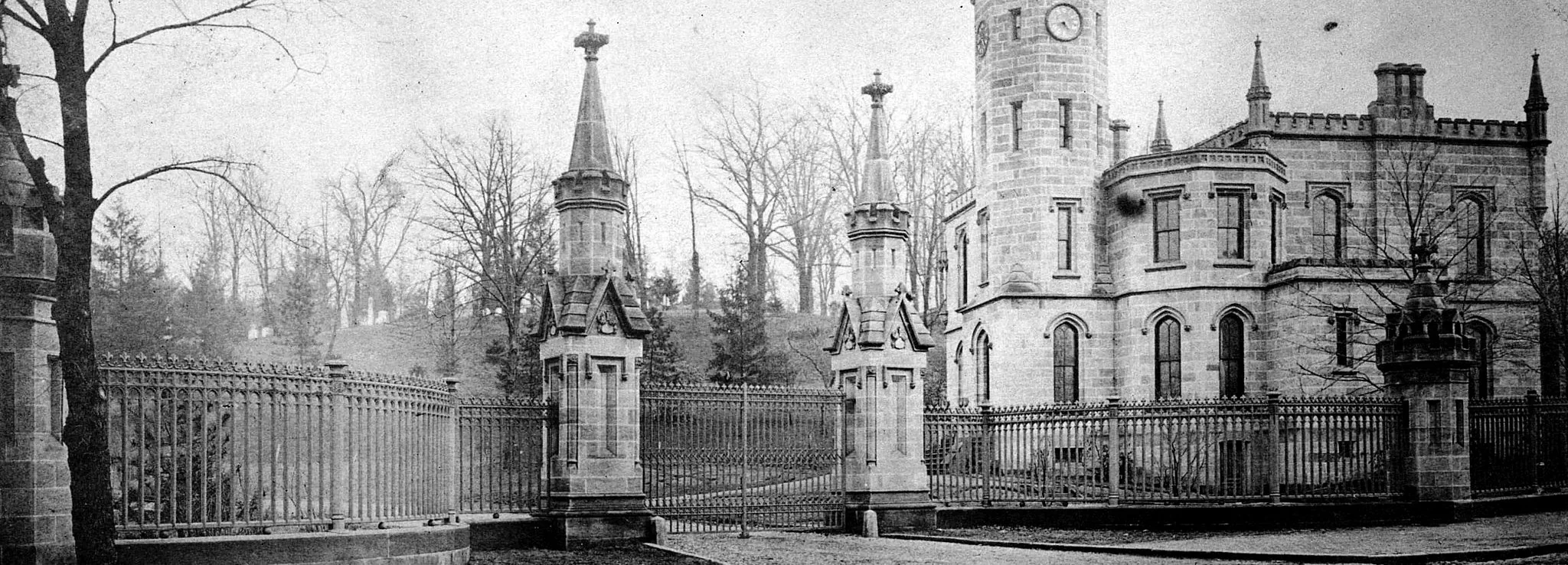
Although established in 1844, Allegheny Cemetery’s history began as early as 1834. An initial attempt was made by Dr. James Ramsey Speer, Stephen Colwell, and John Chislett, Sr. to establish a rural cemetery outside the city of Pittsburgh. The need for new burial grounds was abundantly clear as church graveyards became overcrowded and unusable. Rural cemeteries were growing in popularity around Europe before making their way to the United States.
Speer, Colwell, and Chislett were connected with the Third Presbyterian Church of Pittsburgh, one of the churches in the city looking for new burial sites. The congregation’s first proposed idea was to purchase a lot belonging to the heirs of Judge Roberts, situated on the south side of Wylie Street. The entire lot, containing eleven acres, was offered for five thousand dollars on “easy terms” and was considered large enough for one congregation.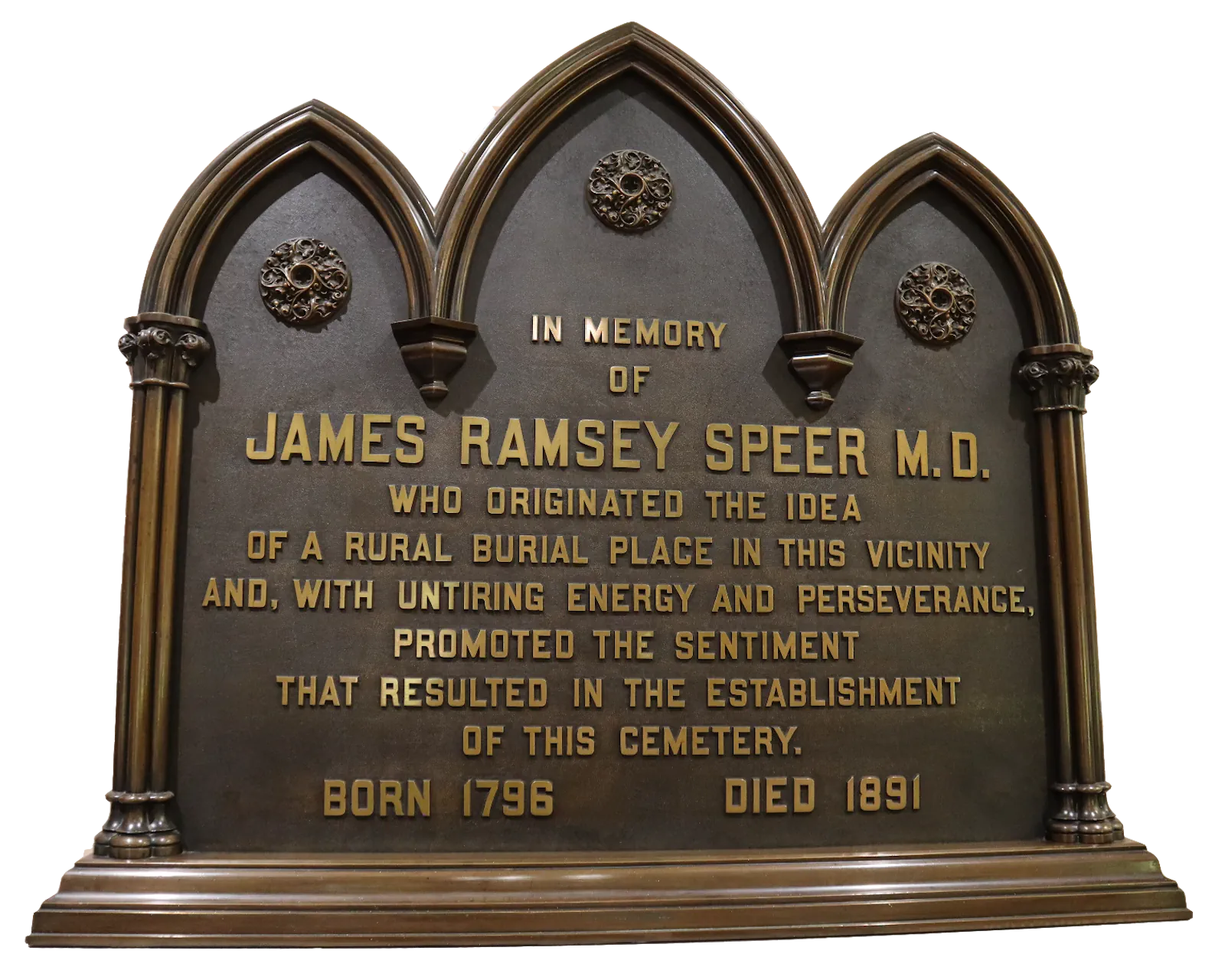
The decided success of Mount Auburn Cemetery in Boston, established in 1831, led them to change their plan, so as to embrace the prospective needs of the whole population of Pittsburgh and Allegheny City (now modern day North Side). The new plan called for a rural burial ground open to all denominations. With this thought in mind, Dr. Speer visited Mount Auburn in Boston, Laurel Hill Cemetery in Philadelphia (1836), and Greenwood Cemetery in New York (1838).
In the interval of years between 1834 and 1842, continued efforts were made to keep the subject alive through occasional articles in the newspapers advocating the measure. The Panic of 1837, a nationwide financial crisis, unfortunately pushed plans for a new burial ground out further.
By 1844, members of the First Presbyterian Church and Trinity Episcopal Church met to solve the issue of establishing a new burial ground. Through these meetings, a committee to incorporate a cemetery company as a tax-free, non-profit organization, was established. Their other goals included finding proficient land outside of the city, establishing a charter, and raising the funds to establish the cemetery.
The charter, written by prominent lawyer and State Representative Richard Biddle, created a permanent non-profit corporation that was permitted to “sell plots and lots in fee simple, or otherwise, without distinction nor regard to sect.”
At the same time, repeated explorations were made of all the sites that were considered suitable or available for the purpose, until the farm and homestead of Col. George Bayard, roughly one hundred acres and located between the Greensburg Pike and the Sharpsburg Ferry, was chosen.
The State of Pennsylvania granted the committee’s charter on April 24, 1844. In a resolution created by the new cemetery’s Board of Managers, they established that the money raised by lot sales would be used to pay off the debt from the land purchased, and to improve and maintain the grounds. Biddle would go on to serve as the cemetery’s first president.
Allegheny Cemetery’s first burial took place on April 14, 1845. The first interment was Margaretta Bayard Briggs, daughter of Col. Bayard, who sold the farm land that became Allegheny Cemetery.
The Charter of Allegheny Cemetery is unique in that it is not limited in time, nor does it contain any clause reserving the right to revoke the privileges granted. Therefore, Allegheny Cemetery was established for the purpose of perpetuity. The same mission of the civic-minded philanthropists who established Allegheny Cemetery has been carried out since 1844, and today many of our most prominent citizens are proud to serve as Managers and Corporators without the thought of remuneration for their services.
“Allegheny Cemetery, historically a rural burial ground, provides a beautiful, respectful resting place for the dead and serves the community as a living tribute to generations past. Our mission is to provide comfort to the families we serve by offering a peaceful environment, an elegant landscape, and a commitment to perpetually honor all of those entrusted to our care.”
For more information on our history, check out our historical publications!
Sourcing: Allegheny Cemetery: A Romantic Landscape in Pittsburgh, Walter C. Kidney (1990); Allegheny Cemetery Archive; Allegheny Cemetery by Lisa Speranza and Nancy Foley (2016).
Allegheny Cemetery Book
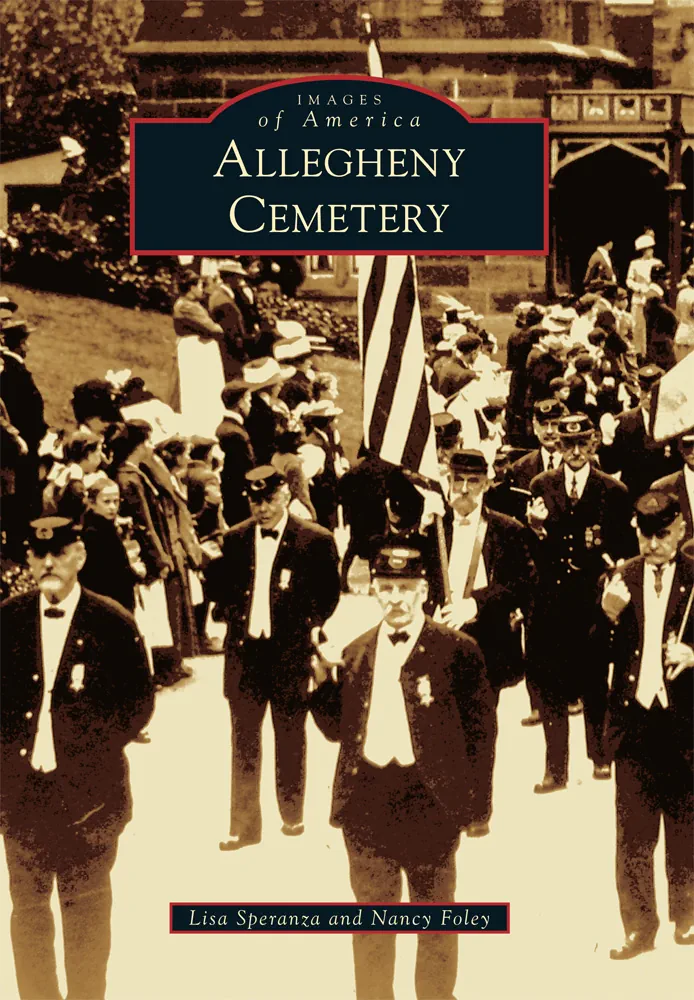
Price – $21.99
Published in 2016 with Arcadia & The History Press as part of their “Images of America” series, we proudly present our most recent book for sale. All proceeds benefit the Allegheny Cemetery Historical Association, a 501(c)3 Non-Profit Organization founded in 1980 to support the preservation of Allegheny Cemetery’s historic buildings and grounds.
Contact the office at 412-682-1624 to order your copy!
Genealogy Requests
The Allegheny Cemetery Historical Association is charged with maintenance and preservation of our priceless records. We request that you enclose a $25.00 per name donation to the A.C.H.A. in support of our mission. This can be paid over the phone or by check.
Since such a search takes time and must be done as time permits, please allow 3 or more weeks for our response. Lastly, please note that some information may not be available in order to protect the privacy of individuals or families.
Our online records will be updated with any new information found through this research.

Submitting your request
We are ready to assist you with your search for ancestors who might be interred in Allegheny Cemetery. Please complete the Genealogy Request form and based on what is recorded in our archive, we may be able to provide you with the following:
- Deceased name as listed on our records
- Date, place, and cause of death
- Place of birth
- Section and lot numbers
- Funeral home name and address
- Name of next of kin or family members (if provided at that time)
- Names of relatives interred in the same lot
- Printed maps of the cemetery, section and lot to aid in finding the grave site
Please be sure to include the following information:
- Full name of deceased – including possible alternate spellings, nicknames, maiden names or other married names.
- Date of Death – we must have the year or estimated year.
- Lot Owner – person who originally purchased the property or the person who made the cemetery arrangements.
Help Preserve a Pittsburgh Legacy
For over 180 years, Allegheny Cemetery has been a living piece of Pittsburgh’s history — and keeping it that way takes a community. The Allegheny Cemetery Historical Association works tirelessly to protect our hallowed grounds, historic structures, and beloved landmarks.
Your generous support helps aid in the conservation, preservation, and restoration of the historic Allegheny Cemetery.